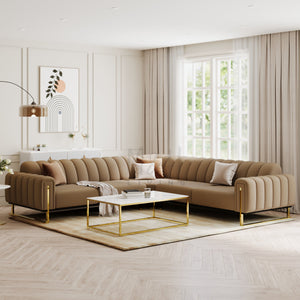
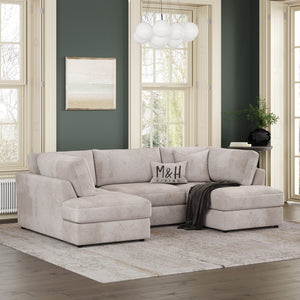
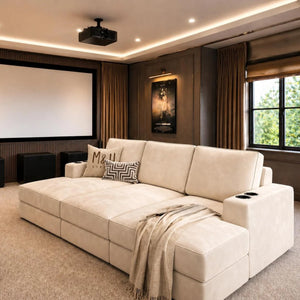
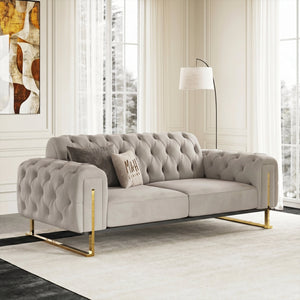
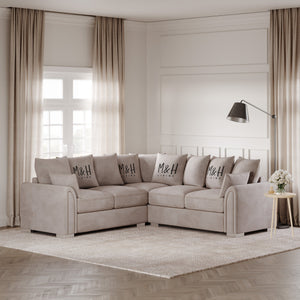
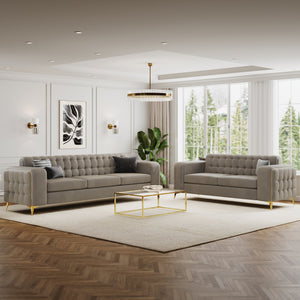
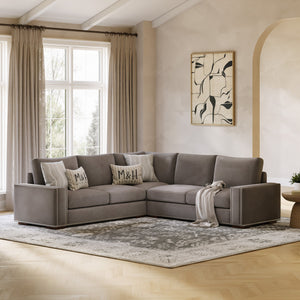
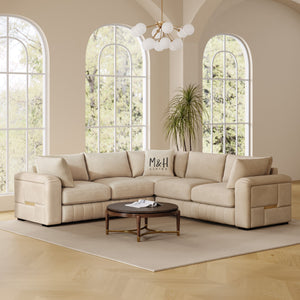
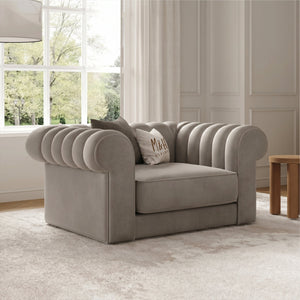
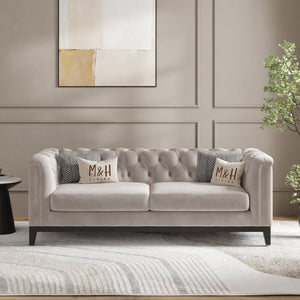
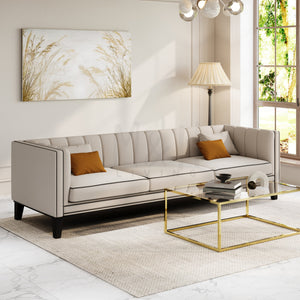
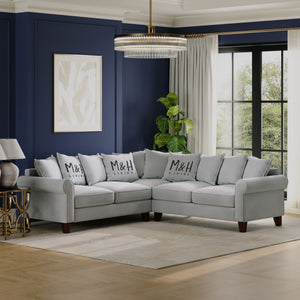
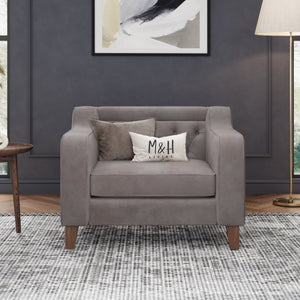
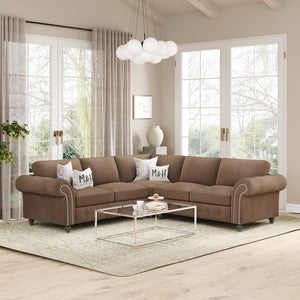
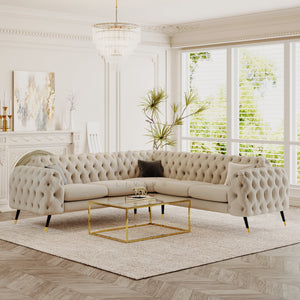
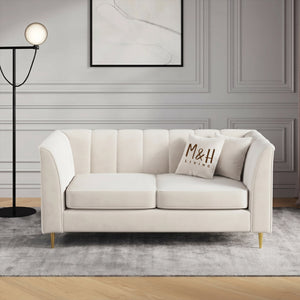









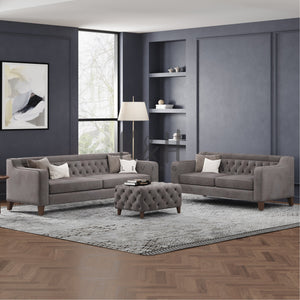

Imagine what a living room would be like if it were akin to an exhale; minimalist, radiant, and utterly human all at the same time. It’s the power of Scandinavian design that isn’t found in any ornamentation or showmanship; rather, it’s derived from simplicity, materiality, and the artful dance of light, touch, and scale. A Scandi-inspired living room is not about adornment but rather about creating a certain mood; a place where the mind finds solace and the mundane is uplifted in subtle ways.
Yet, how can one craft this kind of living room without ending up with a mere copycat design? How does one even start?
What is the Philosophy Behind the Scandinavian Style?
The scandi style is based on a unique philosophy that has developed through a lifestyle defined by long winters, little sunlight, and a deep connection to nature. The interiors, in this case, become places of refuge where lighting is emphasised, material authenticity is maintained, and comfort achieved in subtle ways.
In such an approach, the questions that need to be answered are no longer what one needs to add in the cosy scandi living room furniture, but rather what one may take away without compromising the feeling of the space.
1. Shaping Light with Intention
It is not about the practicality of light; it is more about shaping the light. In the warm Scandinavian living room during daytime, the sheer curtains or the plain windows encourage the light to spread softly around the room. The heavy drapes are not always appreciated because they create a barrier to the conversation between inside and outside.
At night, the light becomes an artwork; a combination of hanging pendants as silent as orbs, floor lamps that throw long shadows, and candles that create flickering patterns. What does it mean to experience such light? It makes one feel as if the atmosphere in the scandi living room were touched by the light.
2. Using a Neutral Colour Palette
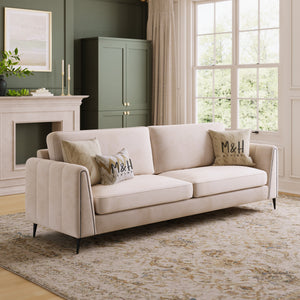
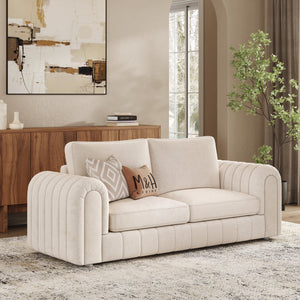
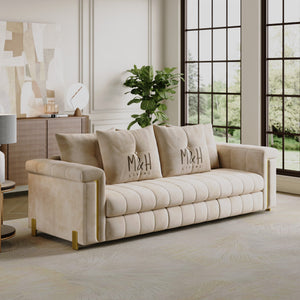
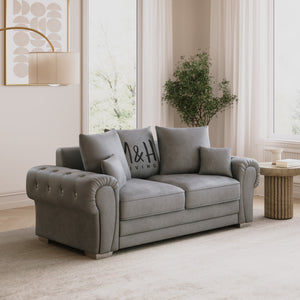
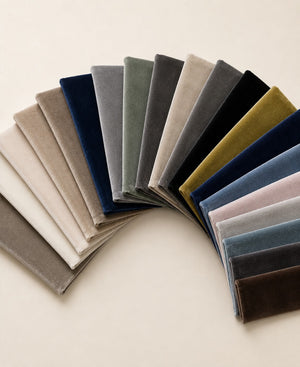
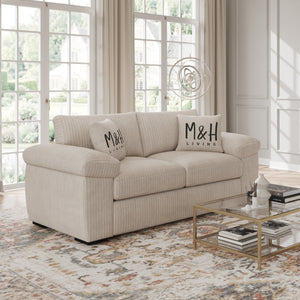
Starting with the basics, there is the colour palette that seems to float. Consider not only white but pastel, muted tones of chalk, bone, frost, sand, and even gray. They serve as mirrors that help expand the daylight and dissolve lines. However, these elements are complemented by accents such as a smoke-gray armchair, a dull olive blanket, or a bit of charcoal in a picture frame. In the midst of this harmonious restraint, furniture pieces such as the MH Lily Sofa and MH Somerset Sofa come to play in the continuity of their ivory and cream shades. There are no extremes but rather soft transitions from one colour to another.
Would it be possible to make a room look bigger without changing its size? In Scandinavian style living rooms, the answer is yes due to colour restrictions.
3. Layering Textiles for Warmth Without Weight
If colours are controlled and furniture kept to a minimum, how can cosiness be achieved? In Scandinavian style, it is achieved by means of textiles, although even there, the need for restraint applies. In this aspect, layering is essential, yet not too much layering. An elegant drape of a woolen throw, a linen pillow with a bit of crumpled charm about it, a woven rug of gentle geometric forms, are all part of the recipe for creating cosiness without being overdone in combination with a scandi style sofa. It is to remember that the material selections are made according to their textures: wool, linen, cotton, and sometimes even sheepskin.
4. Use Nature as a Silent Collaborator
A Scandinavian living room will never cut itself off from nature; rather, it will bring it in, gently and humbly. This could be in the form of a beautiful sculpted plant, a branch placed inside a pot of ceramic, or an unclothed piece of wood grain. The idea is not to overpopulate but rather to make a statement about nature, even when it is not present visually. When it comes to the amount of nature needed, how much is too much?
5. Honouring the Role of Craft
Handmade artifacts add a level of intimacy to a Scandinavian style living room that is hard to match with mass-produced goods. A handcrafted bowl, a basket, or a vase with some minor imperfections; all these have a personal touch about them. It adds enough variety to prevent the space from becoming too sterile, yet maintains consistency with the entire design concept in combination with scandi style sofas.
6. Introducing a Fireplace for a Scandi Look
The fireplace in most Scandinavian homes becomes a focal point – a physical and symbolic point of warmth. When there is no fireplace, it is created through design; a group of chairs in the center of the room, warm lights, soft textiles. It does not matter how real this element is; what really matters is that it creates a feeling of gathering around.
7. Enhancing Spatial Flow: Unbroken and Intentional
The Scandinavian living room design avoids disintegration. The furniture arrangement invites mobility, vision is clear, and connections between sections are smooth. The Ambassador 3 + 2 seater sofa set, for instance, contributes to the feeling of order by virtue of its orderly arrangement, where there are large and small seats arranged in an orderly fashion without dividing the room into distinct parts. The combination of the sofa set promotes easy movement within the room. Thus, even in limited spaces, a feeling of coherence can be maintained through material consistency and an absence of style changes.
8. Embrace the Quiet Power of Symmetry
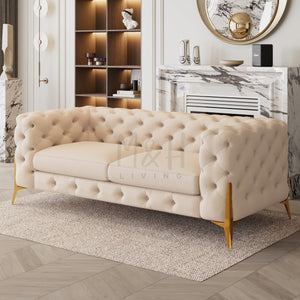
Equilibrium, not perfection, is what Scandinavian design strives for. Balance is sought, although not always adhered to strictly. Seating or lighting that is balanced will create a feeling of tranquility, but a small adjustment here, or an item placed asymmetrically, gives it an air of reality. Amid this balanced harmony, the existence of a scarlet sofa with a buttoned back and metallic elements does not need to be ornamented further. Since its physical presence will suffice in its harmonisation without disrupting the spatial equilibrium.
9. Inviting Acoustic Softness
Another element within the design of Scandinavian interiors that is frequently neglected is sound. Materials such as rugs and fabrics that absorb sounds create an atmosphere of serenity within the space. What does silence look like? Silence looks soft and understated in the scandi style living rooms.
10. Adapting to Seasonal Shifts
The Scandi style is not rigid but flexible. Darker materials and colours may come into play during the cold season, while the warmer season calls for lighter materials and floral details.
Such flexibility allows the decor to remain versatile and adaptable to changing seasons.
11. Choosing Furniture as Quiet Architecture
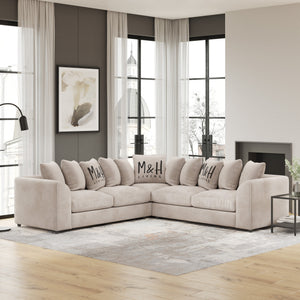
In Scandinavian-style furniture, one would see something similar to architecture; that is, low and linear. The sofas are usually low and long, such as L shape sofas, thereby helping create unobstructed vision.
The use of wood is prominent; this includes light-coloured varieties such as oak, ash, or birch, and the pieces have thin legs and rounded edges. No more than three furniture pieces should be used in a room; they can be a scandi style sofa, lounge chair, and a small table. Spaces between furniture are also part of design and not absence.
Begin Your Scandi Style Living Room Journey
The warm Scandinavian living room design does not come together; rather, it distills itself. It requires wisdom, patience, and restraint to create a space that has a sense of grounding and elevation. Each element of a well-designed Scandinavian living room engages in an unspoken conversation about shape, light, and texture. Can simplicity, when done thoughtfully, serve as the pinnacle of sophistication? That is the idea behind the Scandinavian approach. Simply utilise these Scandi lounge ideas and create a calm, cohesive interior.